

by
Jorge Rodrigues
/
Cloud Computing in 2026: Skills, Security, and Hiring Priorities for Modern Teams
As cloud adoption matures, success depends on secure architecture, operational discipline, and hiring teams with real delivery experience.
Cloud Operating Models
Secure Cloud Architecture
Hiring Cloud Teams
Cloud computing has evolved from an efficiency upgrade into a core business capability. Today, adoption is no longer just about migrating workloads – it is about operating securely at scale, controlling costs, and enabling faster product development cycles.
Across the US, Northern Europe, and LATAM, organizations continue investing in major cloud platforms, hybrid and multi-cloud environments, security and governance frameworks, and automation, observability, and reliability engineering.
As cloud maturity increases, the challenge shifts away from choosing a platform and toward hiring professionals who can build and operate modern environments without introducing operational risk.
This guide highlights the key trends shaping cloud computing today, with practical insight into what cloud teams need and which skills remain in demand.
What’s Changing in Cloud Computing Today
Cloud adoption is becoming more operationally demanding. Many organizations have already migrated core workloads but now face second-order challenges, including cost control, identity and environment security, reliability improvements, tool sprawl, and regulatory compliance.
As a result, cloud teams increasingly require cross-functional capability – combining engineering depth, security awareness, and strong operational discipline.
Regional Trends: How Cloud Adoption Looks Across Key Markets
North America: Multi-Cloud Scale and Cost Discipline
In the United States and Canada, cloud adoption is mature, but complexity remains. Organizations increasingly operate across multiple cloud providers while focusing on cost optimization (FinOps), cloud security and identity management , and standardized platform operations.
Hiring is often focused on people who can reduce risk in production environments, not just build proof-of-concepts.
Europe: Compliance-Driven Cloud Architecture
IIn Europe, cloud decisions are frequently shaped by governance and regulatory constraints.
Key drivers include GDPR requirements, security frameworks, audit readiness, traceability, and risk management for third-party services.
This environment increases demand for cloud professionals who understand secure architecture patterns and can operate within compliance-driven environments.
LATAM: Growth, Modernization, and Strong Engineering Supply
LATAM continues to grow as a cloud market, particularly in sectors such as financial services, retail, telecom, and public-sector digitalization.
Companies expand hiring in the region not only for cost efficiency, but also because LATAM has developed strong technical communities with extensive experience in remote collaboration.
Although the region is often discussed alongside outsourcing, many organizations use LATAM for direct hiring, including contract hiring, when flexibility, speed, and time zone alignment matter.
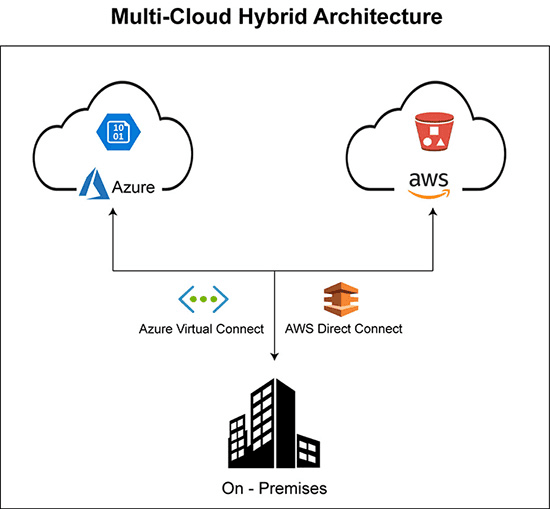
Hybrid Cloud and Multi-Cloud: Why Complexity Is the New Normal
Most organizations now operate across a mix of legacy systems, cloud-native services, on-prem infrastructure, vendor-specific tooling, and multi-region environments.
That’s why hybrid cloud and multi-cloud have become standard architectures rather than edge cases.
The technical challenge is rarely the cloud platform itself. It’s the operating model: ownership, governance, reliability, and security.
Cloud Security and Compliance: Hiring Has Shifted “Left”
Cloud security is no longer a specialized function that “reviews” delivery at the end. In modern teams, security requirements shape architecture from day one.
Demand remains high for professionals with experience in:
identity and access management (IAM)
secrets management and key rotation
secure networking (VPC design, segmentation, VPNs)
logging and monitoring policies
incident response discipline
compliance workflows (including GDPR-related controls)
Security is often the difference between a cloud environment that scales cleanly and one that becomes expensive and fragile over time.
In-Demand Cloud Roles (and What They Actually Do)
Cloud hiring works best when companies are clear about scope. In practice, the roles most frequently requested include:
Cloud Architect
Designs target architecture, cloud standards, and governance patterns – often with a focus on multi-cloud or hybrid requirements.
Platform Engineer
Builds reusable infrastructure components and internal developer platforms (IDPs), improving engineering velocity and consistency.
DevOps Engineer / SRE
Focuses on reliability, automation, deployment workflows, observability, and production stability.
Cloud Security Engineer
Designs and implements controls, policies, monitoring, and security tooling for cloud environments.
FinOps / Cloud Cost Specialist
Helps organizations control cloud spend and build sustainable cost accountability models.
Cloud Hiring Priorities: What to Look for Beyond Certifications
Certifications can be useful, but they rarely predict delivery maturity.
Cloud teams increasingly prioritize real-world production experience, the ability to troubleshoot under pressure, familiarity with incident workflows, clear communication habits, and strong collaboration with security and product teams.
Cloud work has become operational. The most valuable professionals are not only builders, they are maintainers and operators.
Nearshoring, Outsourcing, and Cloud Teams: A Practical View
Organizations frequently explore nearshoring and outsourcing for cloud initiatives. The terminology varies, but the underlying drivers remain consistent: access to talent, speed to hire, time zone alignment, and cost efficiency without lowering standards.
For many teams, the priority is not outsourcing delivery. Instead, it is hiring individuals who can strengthen internal capability quickly, particularly for cloud migration, platform engineering, and security-driven cloud programs.
Where Sparkyheads Fits
Sparkyheads is a boutique contract recruitment company specialized in STEM.
We support US and Northern European clients hiring cloud professionals across Southern Europe and LATAM. Our work focuses on recruitment fundamentals, including identifying relevant profiles, conducting initial screening conversations, and coordinating structured introductions and hiring processes.
We are not a cloud consultancy or outsourcing vendor. We help teams hire the right people to execute their cloud roadmap.
Conclusion: Cloud Success Depends on People and Operating Discipline
Cloud computing is now foundational – but competitive advantage comes from how well teams operate.
Secure architecture, cost discipline, reliability, governance, and professionals capable of executing under real constraints are what differentiate successful cloud environments.
The most effective cloud programs are built by teams that hire for delivery maturity and operational ownership – not just tool familiarity.
FAQ: Cloud Computing
What is hybrid cloud?
Hybrid cloud is an architecture that combines public cloud services with private cloud or on-prem infrastructure. It often exists due to regulatory requirements, legacy systems, or operational constraints.
What is multi-cloud?
Multi-cloud refers to using more than one public cloud provider (such as AWS + Azure + GCP), typically to reduce dependency, improve resilience, or meet regional requirements.
Why is FinOps important?
FinOps helps organizations manage cloud costs by improving visibility, accountability, and optimization of spend across teams and workloads.
What cloud roles are most in demand?
Cloud architects, platform engineers, DevOps/SRE professionals, and cloud security specialists remain in high demand as environments grow more complex and operationally demanding.