
by
João coelho
/
The Invisible Race: How Digital Infrastructure Is Reshaping Europe, Latin America, and the United States
As AI growth accelerates, energy, compute density, and sustainability are becoming the defining constraints of digital infrastructure.
AI Infrastructure
Data Center Capacity & Sustainability
Edge Computing & Connectivity
Digital infrastructure has become one of the most strategic assets in the global economy. As AI adoption accelerates, cloud expansion intensifies, and edge computing moves into the mainstream, regions such as Europe, Latin America, and the United States are entering a new phase of competition.
This race is no longer defined by borders alone. It is increasingly shaped by structural constraints including energy availability, sustainability pressures, data center capacity and build speed, compute density requirements, and network proximity.
Countries and cities able to build, power, and scale modern infrastructure will hold a structural advantage in AI readiness, cloud adoption, and long-term digital growth.
Digital Infrastructure: Why It Matters More Than Ever
For much of the past decade, infrastructure was treated as a backend capability. Today, it has become a front-line enabler of competitiveness.
Organizations depend on infrastructure to support AI training and inference workloads, high-performance computing, enterprise cloud migration programs, real-time low-latency applications, and resilient multi-region operations.
As a result, operators are rethinking how data centers are designed, built, powered, and scaled.
The Global Data Centre Landscape: Higher Density, Higher Pressure
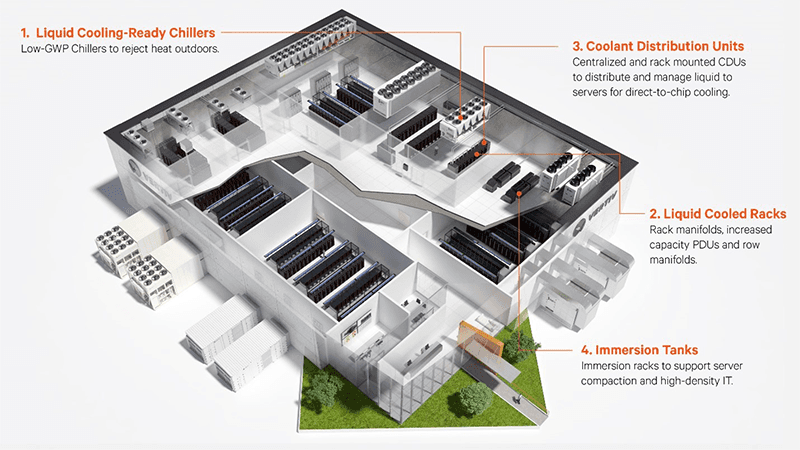
Demand for high-density, AI-capable data centers continues to rise. Operators are moving away from traditional configurations and investing in higher rack densities, liquid cooling and advanced thermal systems, upgraded power distribution strategies, and more sustainable energy procurement models.
What was once primarily a real estate and connectivity discussion has evolved into a power and engineering challenge.
Europe: Growth Under Energy and Sustainability Constraints
Europe continues expanding data center capacity, particularly in established hubs such as Frankfurt, Amsterdam, Paris, and London.
However, growth is increasingly constrained by limited energy availability in key metro areas and growing regulatory pressure around sustainability and emissions.
These constraints are pushing the market toward renewable energy procurement, carbon-efficient facility design, advanced cooling approaches, and long-term grid alignment planning.
At a policy level, infrastructure is also becoming a strategic priority as Europe evaluates how to support AI ecosystems, high-performance computing, and sovereign digital capabilities.
Latin America: Rapid Expansion and Increasing Maturity
Latin America is emerging as one of the fastest-growing digital infrastructure regions globally. Growth is driven by expanding cloud adoption, 5G rollout, increasing demand for colocation, and the need for lower-latency environments.
Key growth markets include Brazil, Mexico, Chile, and Colombia.
Regional and global providers are scaling capacity through hyperscale campuses, modular deployments, and a growing edge footprint. At the same time, sustainability and resource constraints are entering the conversation - including water usage in drought-sensitive regions and the long-term impact of high-density infrastructure.
As LATAM expands, supporting systems such as power distribution, advanced cooling, and DCIM platforms are becoming strategic investments rather than operational afterthoughts.
The United States: Scale, Speed, and Engineering Standards
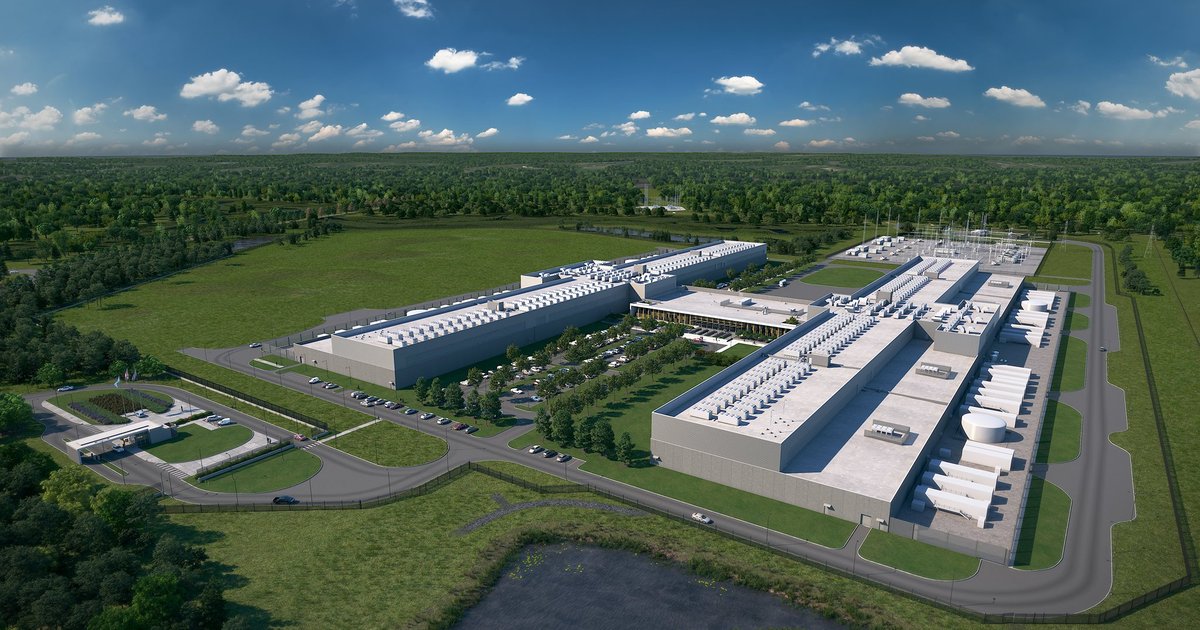
The United States remains the largest and most aggressive market for hyperscale expansion, with major hubs including Northern Virginia, Dallas, Phoenix, and Atlanta.
Demand continues to be driven by cloud providers and AI-led compute growth. The U.S. market is also shaping many engineering standards for next-generation AI-ready facilities, including liquid cooling systems, high-density power architecture, large-scale energy procurement strategies, and advanced automation and monitoring.
In practical terms, the U.S. is not only building more infrastructure — it is defining what “AI-ready” infrastructure looks like.
Sustainability in Digital Infrastructure: From Optional to Non-Negotiable
Sustainability is now a central constraint across Europe, LATAM, and the United States. Operators and hyperscalers face mounting pressure to reduce carbon footprints , increase renewable energy usage, improve cooling efficiency, and design more resource-aware facilities.
AI workloads intensify the challenge. High-density compute increases demand not only for energy, but also for cooling, thermal management, and continuous optimization.
As a result, infrastructure decisions increasingly reflect carbon-aware workload placement, cooling innovation, renewable procurement strategies, and energy efficiency at scale.
Edge Computing: Moving from Concept to Requirement
Edge computing is no longer a future roadmap item. It is becoming an operational requirement in sectors where latency and real-time processing are critical. Adoption is driven by IoT and connected devices, real-time analytics, industrial systems, and latency-sensitive consumer applications.
In Latin America, edge deployments are particularly important due to geography and connectivity variability. Edge infrastructure improves performance and reliability while introducing new challenges around governance, standardization, and sustainability.
What This Means for Organizations Planning Digital Growth
For modern organizations, the infrastructure landscape is becoming more complex, but also more consequential.
Teams planning for the next decade of AI and cloud growth must think beyond platform choice. They need clarity on where capacity can realistically scale, what long-term power strategy supports that growth, how cost and sustainability will be managed, and how distributed infrastructure will be governed and monitored.
Infrastructure is no longer simply backend support. It is increasingly a differentiator in speed of innovation, resilience and uptime, performance and latency, cost control, and regulatory readiness.
Conclusion: Infrastructure Is Becoming the Competitive Layer
The invisible race is not about who adopts AI first or migrates workloads fastest. It is about who can build infrastructure foundations that make those goals sustainable.
Regions and organizations that successfully balance performance density, energy availability, sustainability, and operational governance will be best positioned to scale modern digital systems reliably.
Digital infrastructure has become a competitive layer - and its evolution will shape the next decade of business innovation.
FAQ: Digital Infrastructure, Data Centers, Cloud, AI, and Edge Computing
What is digital infrastructure?
Digital infrastructure refers to the systems that enable modern computing and connectivity at scale, including data centers, cloud platforms, network infrastructure, and increasingly edge computing environments. It’s the foundation behind cloud services, AI workloads, enterprise IT operations, and real-time digital services.
What is a hyperscale data center?
A hyperscale data center is a large facility designed to support massive computing workloads, typically operated by major cloud providers. Hyperscale environments are built for scalability, automation, and very high power and cooling capacity.
Why are AI workloads changing data center design?
AI workloads increase demand for high-density compute, driving higher rack densities, greater power consumption, advanced cooling requirements, and stronger operational efficiency standards.
What does “compute density” mean?
Compute density refers to the amount of computing power delivered within a given physical footprint. Higher density requires greater power availability and advanced thermal management.
It has become a key constraint in AI-ready infrastructure.
Why is energy availability a constraint for data center growth?
Data centers require large, reliable, and continuous power. In many regions, especially in parts of Europe, the grid and permitting environment can limit how quickly new capacity is built. Energy availability can determine where future data center growth is possible.
Which regions are growing fastest in data center capacity?
The United States continues expanding at hyperscale levels, Europe is growing under energy and sustainability constraints, and Latin America is expanding rapidly alongside cloud adoption and connectivity improvements.
What is edge computing and why does it matter?
Edge computing processes data closer to users or devices, reducing latency and improving performance for real-time applications.
What is colocation and why is demand increasing?
Colocation refers to hosting infrastructure in third-party data centers rather than building and operating your own facilities. Demand continues to grow because colocation enables faster deployment timelines, scalable capacity, flexibility for multi-cloud and hybrid strategies, and access to mature infrastructure markets. It is widely used by enterprises and cloud-adjacent platforms that need to scale without heavy upfront build requirements.
Why is sustainability a major issue for data centers?
Data centers are energy-intensive. Operators must reduce emissions, optimize water usage, and improve efficiency - challenges intensified by AI-driven compute demand.
What is DCIM and why does it matter?
DCIM (Data Center Infrastructure Management) refers to tools used to monitor and manage data center operations, including power usage, cooling performance, capacity planning, and operational visibility. DCIM becomes more important as environments scale and density increases.